

Over the past thirty-four years in orthopaedic surgery, I have watched the field of tissue regeneration evolve dramatically. From open procedures and hardware fixation to the biologic revolution of stem cells, platelet-rich plasma, and growth factors, medicine has steadily shifted toward supporting the body’s own regenerative pathways rather than simply cutting and replacing what is damaged.
Peptide therapy represents the next chapter of that evolution, and among the hundreds of peptides now being studied, BPC-157 stands out as one of the most promising compounds being researched for patients dealing with musculoskeletal injuries, joint discomfort, and gastrointestinal challenges.
At Texas Center Wellness, peptide therapy is a core part of the regenerative toolkit we offer patients across Texas and the seventeen states we serve through telehealth. This post explains what BPC-157 is, what current research suggests, and how we integrate it into personalized wellness plans designed around your unique biology.
What Is BPC-157?
BPC-157, short for Body Protection Compound-157, is a synthetic peptide made up of fifteen amino acids. It is derived from a naturally occurring protective protein found in human gastric juice, the fluid your stomach produces to break down food and protect the lining of the digestive tract.
Unlike most peptides, BPC-157 demonstrates remarkable stability. It survives exposure to stomach acid for extended periods, which is one reason researchers have explored both injectable and oral routes of administration. That stability also makes it unique among therapeutic peptides, most of which degrade rapidly outside of controlled laboratory conditions.
It is important to note that BPC-157 is not FDA-approved for therapeutic use. However, a significant body of preclinical research, primarily animal studies, has accumulated over the past two decades, consistently pointing to meaningful effects on tissue regeneration, inflammation modulation, and gastrointestinal protection. In February 2026, HHS Secretary Robert F. Kennedy Jr. announced that BPC-157 would be among approximately fourteen peptides returning to Category 1 status, allowing licensed compounding pharmacies to legally prepare it under physician prescription. This regulatory shift represents a major turning point for patients and practitioners who have long recognized the compound’s research potential.
How BPC-157 Supports Tissue Regeneration at the Cellular Level
As an orthopaedic surgeon who transitioned into regenerative and functional medicine, I am always interested in mechanism. What is a compound actually doing inside the body, and why does it work?
BPC-157 operates through several interconnected pathways that support tissue regeneration:
Angiogenesis: Building New Blood Supply
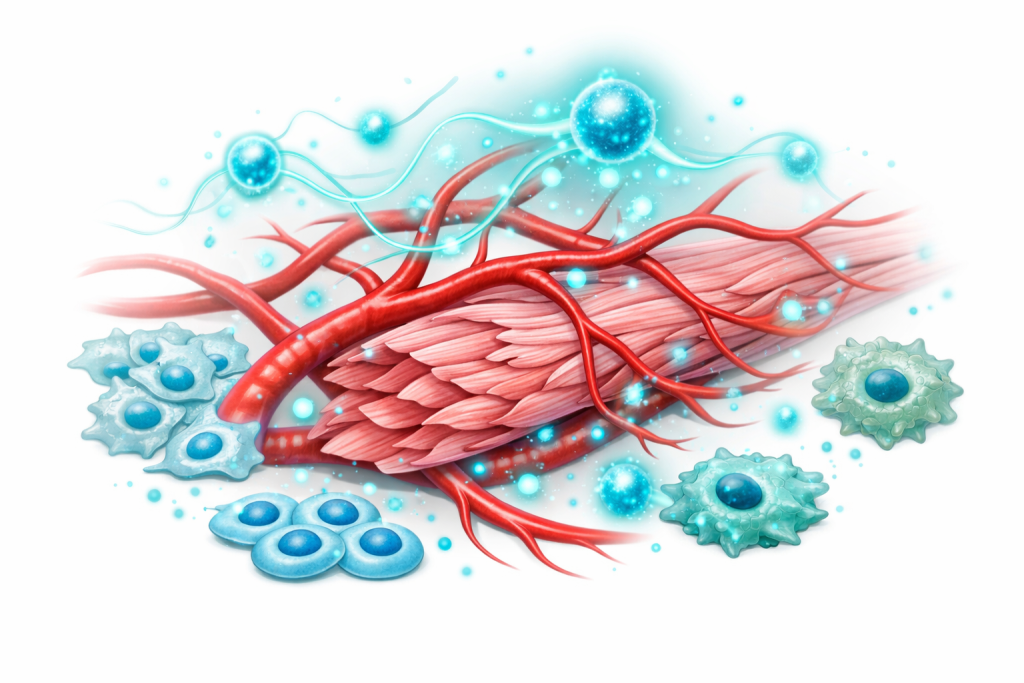
One of BPC-157’s primary actions involves the VEGF (Vascular Endothelial Growth Factor) receptor pathway. By activating VEGFR2, the peptide signals the body to generate new blood vessels in damaged areas. This is critical because tissue regeneration requires adequate blood flow. Tendons, ligaments, and cartilage are notoriously poor in blood supply, which is exactly why injuries to these tissues recover so slowly. BPC-157 addresses that limitation at its root.
Cell Migration and Attachment
BPC-157 activates focal adhesion kinase (FAK) and paxillin, proteins that help regenerative cells move toward an injury site and anchor themselves in place. Think of this as giving your body’s repair crew both a GPS and a set of anchors. Cells know where to go, and they stay put once they arrive.
Growth Factor Modulation
The peptide stimulates growth factors including EGF (Epidermal Growth Factor) and FGF (Fibroblast Growth Factor), both of which play central roles in tissue regeneration. It also activates the JAK-2 signaling pathway and Early Growth Response gene 1 (Egr-1), which act as master switches turning on genes involved in cell survival, growth, and immune response.
Inflammation Regulation
Unlike NSAIDs, which suppress inflammation broadly and can interfere with the body’s regenerative process, BPC-157 modulates inflammatory pathways more selectively. Preclinical research suggests it turns down excessive inflammatory signaling while preserving the controlled inflammatory response that is part of normal tissue regeneration. In fact, studies have shown BPC-157 may protect against the tissue damage caused by chronic NSAID use, particularly in the gastrointestinal lining.
BPC-157 Research: What the Evidence Shows
While human clinical trial data remains limited, the breadth and consistency of preclinical evidence across dozens of studies paints a compelling picture. Here is where BPC-157 has shown the most promise:
Muscle and Tendon Repair Support
This is where BPC-157 has accumulated its strongest body of research. Animal studies consistently demonstrate accelerated tissue regeneration of injured tendons, muscles, and ligaments. The peptide promotes tendon outgrowth, supports cell survival at the injury site, and improves the biomechanical strength of regenerated tissue. For patients recovering from sports injuries, repetitive strain, or post-surgical rehabilitation, this has significant clinical implications.
At Texas Center Wellness, muscle and connective tissue support is a specialty that has been central to my career. BPC-157 fits naturally into the regenerative protocols we build for patients dealing with rotator cuff injuries, Achilles tendon issues, joint instability, and chronic soft tissue discomfort that has not responded to conventional approaches.
Gut Function and Digestive Support
Given its origin in gastric juice, it is perhaps unsurprising that BPC-157 demonstrates protective effects on the gastrointestinal tract in research models. Studies have shown it can support intestinal tissue regeneration, contribute to gut microbiome stability, and protect against ulceration, particularly that caused by NSAID use. For patients dealing with inflammatory bowel challenges, intestinal barrier dysfunction, chronic reflux, or the digestive consequences of long-term medication use, BPC-157 offers a research-supported pathway that targets underlying tissue function rather than simply masking symptoms.
This connection between gut function and systemic regeneration is something we take seriously in functional medicine. The gut is not an isolated organ. When intestinal integrity is compromised, it creates a cascade of inflammation that affects joints, muscles, the immune system, and even brain function through the gut-brain axis.
Joint Discomfort and Inflammation Support
Chronic joint discomfort, especially from osteoarthritis or repetitive injury, involves a cycle of inflammation, degraded cartilage, and poor blood supply that feeds on itself. BPC-157’s ability to support angiogenesis, modulate inflammatory pathways, and contribute to collagen production makes it a research candidate for addressing the underlying biology of persistent joint issues, not just the symptoms.
Nervous System Support
Emerging preclinical research suggests BPC-157 interacts with the dopamine, serotonin, and GABA neurotransmitter systems. Animal models show protective effects against drug-induced dyskinesia and dopamine system disruption, pointing to potential applications in neuroprotection and brain-gut axis regulation. While this research is earlier-stage, it reinforces the compound’s broad systemic reach.
How Texas Center Wellness Integrates BPC-157 Into Patient Care
Peptide therapy is never a standalone solution at our practice. A peptide is a tool, and like any tool, its usefulness depends entirely on the context in which it is applied.
When a patient comes to Texas Center Wellness with a musculoskeletal injury, chronic discomfort, or digestive challenges, we begin with a comprehensive evaluation. That includes a detailed medical history, advanced diagnostic bloodwork to assess biomarkers, and a thorough conversation about lifestyle factors like nutrition, sleep, stress, and movement.
BPC-157 may be prescribed as part of a broader protocol that also includes:
Platelet-Rich Plasma (PRP) therapy for concentrated growth factor delivery to injury sites
Stem cell and exosome therapies for advanced tissue regeneration support
Bio-identical hormone optimization to create the right internal environment for tissue regeneration
Nutritional guidance to ensure the body has the building blocks it needs for tissue repair
Other targeted peptides such as TB-500 (Thymosin Beta-4) for complementary regenerative mechanisms, or PT-141 for patients also addressing sexual health concerns
This layered, personalized approach is what separates physician-guided peptide therapy from the self-directed protocols that have become common online. With compounding pharmacies now regaining the legal ability to prepare BPC-157, having a qualified physician design, monitor, and adjust your protocol has never been more important.
What to Expect: Administration and Timeline
BPC-157 is most commonly administered through subcutaneous injection, which delivers the peptide directly into the tissue layer beneath the skin for efficient absorption. For patients targeting gut-specific concerns, oral forms may be appropriate, as the peptide’s unusual stability in gastric acid makes oral delivery viable for gastrointestinal applications.
Based on clinical observation and the available research, most patients begin noticing changes within one to two weeks of consistent use. Musculoskeletal injuries typically show progressive improvement over a four- to twelve-week treatment window, depending on injury severity, the patient’s overall health, and what complementary therapies are being used alongside BPC-157.
Dosing is individualized. There is no universal protocol because every patient’s biology, injury profile, and treatment goals are different. At Texas Center Wellness, your protocol is built specifically for you, monitored through follow-up labs and clinical assessments, and adjusted as your body responds.
Safety Considerations
BPC-157 has demonstrated a favorable safety profile in the available preclinical research. A 2025 pilot study evaluated intravenous BPC-157 in two human adults and reported no adverse effects on cardiac, hepatic, renal, thyroid, or glucose biomarkers. Animal studies using both standard and high-dose protocols have similarly shown good tolerability.
That said, long-term human safety data does not yet exist. Because BPC-157 promotes angiogenesis, there are theoretical concerns about its use in patients with active cancer or a history of malignancy, as new blood vessel formation could theoretically support tumor growth. This is precisely why physician oversight is essential. A qualified provider can evaluate whether BPC-157 is appropriate for your specific health profile and monitor for any unexpected responses throughout treatment.
The 2026 Regulatory Landscape: What Has Changed
For several years, BPC-157 existed in a regulatory gray zone. It was widely used in clinical settings and self-administered by patients who sourced it from research peptide suppliers, but compounding pharmacies were technically restricted from preparing it after the FDA placed it on the Category 2 list in September 2023.
That changed in February 2026, when the HHS announced that BPC-157 would return to Category 1 status. This means licensed compounding pharmacies can once again legally prepare it under a physician’s prescription. It does not mean BPC-157 is FDA-approved, and it does not mean it will be available over the counter. But it does mean that patients now have a clear, legal pathway to access pharmaceutical-grade BPC-157 through their healthcare provider.
At Texas Center Wellness, we work exclusively with trusted, compliant compounding pharmacies that provide batch-level certificates of analysis and meet strict quality control standards. Every peptide prescribed in our practice is pharmaceutical-grade, properly documented, and administered under clinical supervision.
BPC-157 may be worth exploring if you are dealing with:
A tendon, ligament, or muscle injury that has been slow to recover
Chronic joint discomfort or stiffness that has not responded to conventional approaches
Post-surgical recovery where you want to support tissue regeneration naturally
Gastrointestinal challenges such as chronic inflammation, intestinal barrier dysfunction, or NSAID-related damage
A broader interest in regenerative medicine and supporting your body’s own regenerative capacity
The only way to know whether it is appropriate for your situation is through a proper clinical evaluation. We do not prescribe peptides based on a

Take the Next Step
If you are curious about BPC-157 or any of the regenerative peptide therapies we offer at Texas Center Wellness, the first step is a private consultation with Dr. Calvo. Whether you visit us in the Austin area or connect through our secure telehealth platform, we will take the time to understand your history, evaluate your biology, and determine whether peptide therapy belongs in your personalized care plan.
Medical Disclaimer
This article is for educational and informational purposes only and is not intended as medical advice. BPC-157 is not FDA-approved for therapeutic use. The information presented does not constitute a claim to treat, prevent, mitigate, or cure any disease or condition. All treatment decisions should be made in consultation with a qualified healthcare provider based on your individual health profile. Results vary by patient. Texas Center Wellness does not guarantee specific outcomes from any therapy.