
Peptides for hair growth are getting more attention from men and women who want a more thoughtful way to support scalp health, fuller-looking hair, and healthier-looking skin. Hair thinning and visible skin changes can be frustrating because they often involve more than one factor, including hormones, nutrition, stress, inflammation, age, genetics, and daily habits.
At Texas Wellness Center, we believe in giving you clear, science-informed information before you consider any wellness therapy. This blog explains what peptides are, how they may support hair and skin goals, what current research suggests, and why provider guidance matters.
What Are Peptides for Hair Growth and Skin Rejuvenation?
Peptides for hair growth are short chains of amino acids that may act as signals in the body or on the skin. Some peptides are being studied for how they interact with skin appearance, collagen support, scalp environment, follicle activity, and tissue repair pathways. Others are used in topical cosmetic products to support hydration, texture, and healthier-looking skin.
There is an important difference between topical cosmetic peptides and provider-directed peptide therapy. Topical formulas are usually designed to improve the look and feel of the skin or scalp. Injectable or compounded peptide options involve a different level of clinical oversight, safety review, and regulatory consideration.
Common Peptide Categories Discussed for Hair and Skin
Copper peptides: Compounds such as GHK-Cu and AHK-Cu are often discussed for their role in skin appearance, collagen support, and early research related to hair follicle activity.
Signal peptides: These are often used in skincare formulas to support the appearance of smoother, firmer, or more hydrated skin.
Growth factor-related peptides: Some peptides are studied for cell signaling pathways, but they require careful review because stronger biologic activity can also mean greater safety questions.
Scalp support formulas: Some products combine peptides with ingredients that support hydration, scalp comfort, and the appearance of stronger hair fibers.
Peptides are not over-the-counter shortcuts when used in a clinical setting. Any compounded or injectable peptide should only be considered with a qualified, licensed medical provider who can review your health history, goals, medications, and risk factors.
How Peptides Work in the Body and Skin
Peptides help cells communicate. In skincare and scalp support, certain peptides may encourage signals related to hydration, barrier support, collagen appearance, scalp comfort, and the environment around hair follicles. This is why people often search for peptides for skin when they want support for texture, firmness, and a healthy-looking glow.
Hair growth is more complicated. Follicles move through growth, transition, resting, and shedding phases. Hormones, stress, inflammation, nutrition, medications, autoimmune factors, and genetics can all influence that cycle. Peptides may support a healthier scalp environment, but they should not be framed as a reliable standalone answer for every type of hair thinning.
Potential Benefits of Peptides for Hair Growth and Skin
Although research is ongoing and individual results may vary, several potential benefits are often discussed in clinical studies, topical skincare research, and patient experience. The information below is educational and is not medical advice. Any decision about peptide therapy for hair growth should be made with a qualified medical provider.
May Support a Healthier Scalp Environment
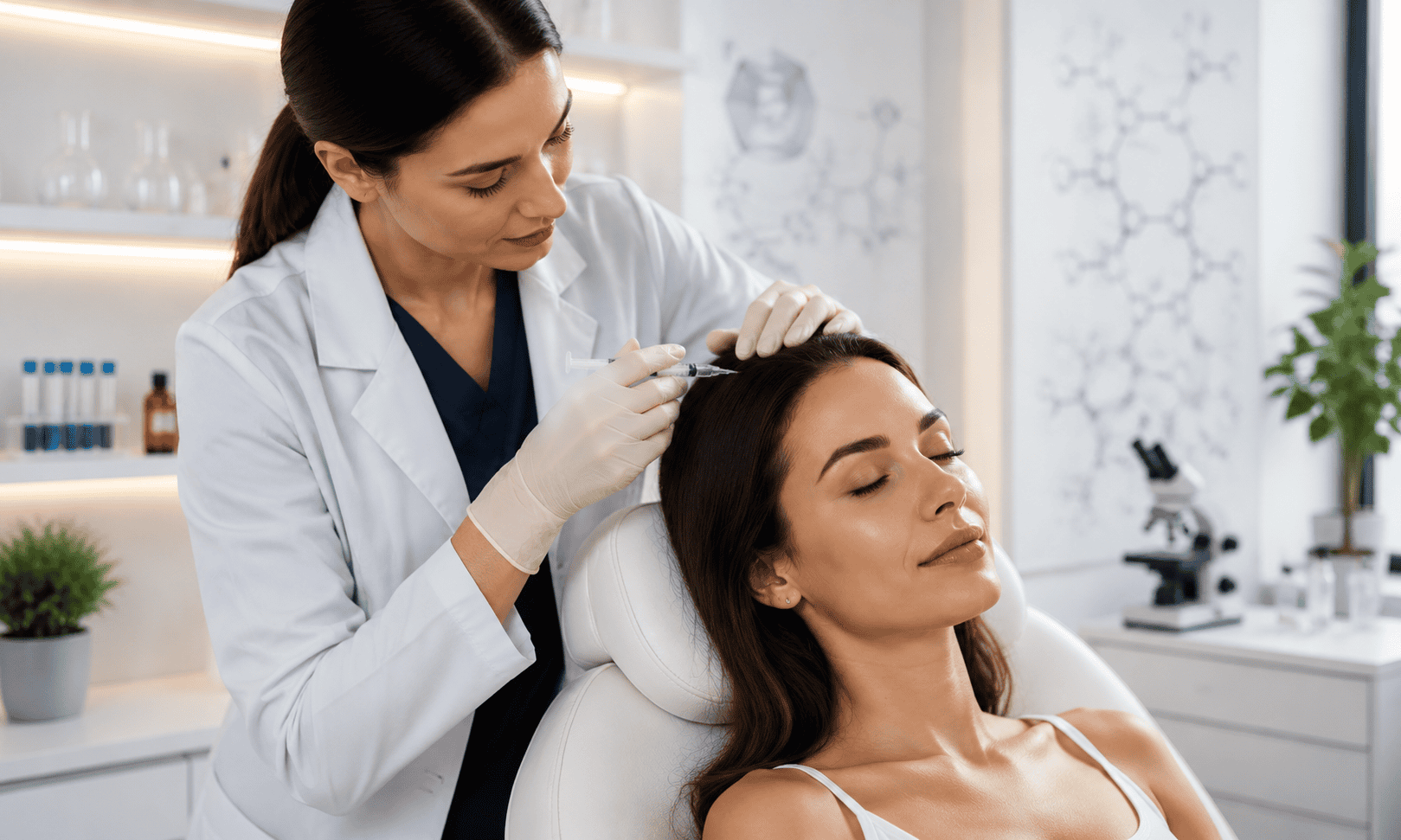
A healthy scalp environment matters because hair follicles sit within living skin. Peptides may support comfort, hydration, and visible scalp quality when used as part of a broader plan. For some patients, this can pair with nutrition, hormone review, stress support, and medical evaluation for the root causes of shedding or thinning.
May Support Fuller-Looking Hair Over Time
Some copper peptide research has explored follicle activity and hair shaft appearance, but much of the evidence is still early or limited. This is why the phrase hair restoration peptides should be used carefully. Peptides may support the conditions for healthier-looking hair, but they should not be expected to produce regrowth for every person or replace a proper hair loss evaluation.
May Support Skin Texture and Firmness Appearance
Certain peptides are used in topical skincare to support the appearance of smoother texture, hydration, and firmness. People often search for anti-aging peptides because they want help with visible changes in skin quality. A safer way to frame this is that peptides may support healthier-looking skin as part of consistent skincare and wellness habits.
May Support a Brighter, Healthier-Looking Glow
Hydration, barrier support, sleep quality, nutrition, and inflammation balance all influence how skin looks. Some formulas marketed as glow skin peptides may help improve the appearance of dullness or dryness when used appropriately. Results are usually gradual, and strong claims should be viewed with caution.
May Fit Into a Broader Aesthetic Wellness Plan
Peptides may complement other provider-guided options, such as lab review, nutrition support, hormone evaluation, topical skincare, scalp care, and aesthetic services. The best plan depends on the person. What supports one patient’s hair or skin goals may not be appropriate for another.
May Help Identify the Bigger Picture Behind Hair and Skin Changes
One of the most useful parts of a consultation is not simply choosing a product. It is important to understand why changes are happening. Low iron, thyroid patterns, stress, postpartum changes, menopause, androgen changes, medication effects, or nutrient gaps can all influence hair and skin. Peptides may be one tool, but evaluation comes first.
How Peptides Fit Into a Wellness Plan
Peptides for hair growth and skin support work best when they are part of a thoughtful wellness plan. Hair and skin are often outward signs of what is happening internally, so a plan should look beyond the surface.
A complete wellness plan may include:
A detailed review of hair changes, skin concerns, timeline, and triggers
Lab work when appropriate, including hormone, thyroid, nutrient, and metabolic markers
Nutrition support focused on protein, iron status, zinc, essential fats, and overall nutrient intake
Stress and sleep support, because recovery affects hair cycling and skin appearance
Scalp and skincare routines that are realistic and consistent
Ongoing monitoring to assess response, tolerability, and whether the plan needs adjustment
The goal is not to chase a trend. The goal is to understand your body and choose options that make sense for your health history and goals.
Who May Be a Candidate?
Peptides for hair growth may be discussed with adults who are noticing changes in hair thickness, scalp quality, hair shedding patterns, skin texture, dryness, or visible signs of aging. They may also be considered by patients who want a wellness-based approach that looks at hormones, nutrients, lifestyle, and skin health together.
Only a qualified medical provider can determine candidacy. A responsible consultation should review your health history, medications, allergies, pregnancy or breastfeeding status, autoimmune history, cancer history, hormone-related concerns, and the type of hair or skin changes you are experiencing.
Peptide therapy may not be appropriate for people who are pregnant or breastfeeding, have certain active or recent cancer histories, have uncontrolled medical conditions, have unexplained skin or scalp symptoms, or are using medications that could create safety concerns. Competitive athletes should also check their governing body before using peptide therapies, because some compounds may be restricted or prohibited in sport.
Safety, Side Effects, and Important Considerations
Peptides for hair growth and skin support should be approached with realistic expectations. Possible side effects depend on the specific peptide, route, product quality, and the person using it. Topical products may cause irritation, redness, dryness, breakouts, or sensitivity. Provider-directed peptide therapy may involve additional risks that should be reviewed before use.
GHK-Cu is a good example of why context matters. Copper peptides are widely discussed in cosmetic skincare, but compounded injectable GHK-Cu has been flagged by the FDA for limited human safety data and potential immunogenicity concerns. That does not mean every peptide-related skincare product is the same. It does mean patients should avoid grey market products and should not self-administer compounded peptides without medical supervision.
Hair growth claims also need caution. Some hair concerns require dermatology evaluation, especially sudden shedding, patchy hair loss, scalp pain, scaling, inflammation, or rapid changes. A peptide-based plan should not delay appropriate medical evaluation.
Patients should be especially careful with online peptide sellers, research chemical websites, and products that make dramatic promises. Quality, sterility, purity, and labeling accuracy matter. Texas Wellness Center prioritizes provider guidance, thoughtful evaluation, and ongoing monitoring.
What to Expect From a Consultation
A consultation at Texas Wellness Center gives you space to talk through hair, skin, and wellness goals with a provider-guided approach. The process may include:
Intake and goal review: We discuss your concerns, timeline, current routine, medical history, medications, and what you hope to improve.
Scalp, skin, and lifestyle discussion: Your provider may ask about shedding patterns, skincare habits, stress, sleep, nutrition, hormonal changes, and prior treatments or products.
Lab work when appropriate: Depending on your symptoms, lab testing may help evaluate hormone patterns, thyroid markers, nutrient status, metabolic health, or other wellness factors.
Personalized option review: Your provider explains whether peptide support may fit your goals and what other options should be considered.
Monitoring and follow-up: Hair and skin changes take time. Follow-up helps track response, side effects, expectations, and adjustments to the plan.
Frequently Asked Questions
Are peptides for hair growth the same as minoxidil or finasteride?
No. Minoxidil and finasteride are established hair loss medications used in specific situations. Peptides are different compounds that may support scalp or skin signaling pathways, depending on the product and route. They should not be seen as direct substitutes without a provider’s guidance.
How long does it take to notice changes from peptide therapy for hair growth?
Hair and skin changes usually take time because follicles and skin turnover follow natural cycles. Some people may notice skin texture or hydration changes earlier, while hair-related changes often require patience. Your provider can help set realistic expectations based on your starting point.
Are peptides for skin and hair FDA-approved?
It depends on the product and how it is used. Many cosmetic skincare ingredients do not require FDA approval before marketing, but companies are responsible for safety and truthful labeling. Compounded or injectable peptides are a different category and require medical supervision and regulatory awareness.
Can peptides replace nutrition, sleep, and scalp care?
No. Peptides may support a broader plan, but they cannot replace nutrition, sleep, stress management, hormone balance, scalp care, or appropriate medical evaluation. The strongest approach usually starts with the foundations and adds targeted support when appropriate.
If you are curious about peptides for hair growth, skin support, or a more personalized aesthetic wellness plan, Texas Wellness Center can help you understand your options. We focus on clear education, thoughtful evaluation, and ongoing monitoring so you can make informed decisions with a qualified medical provider.
Schedule a consultation to explore whether peptide therapy for hair growth or skin wellness support may fit your goals.
Medical Disclaimer
This blog is for educational and informational purposes only and is not intended as medical advice, diagnosis, or treatment. Statements regarding peptides and wellness therapies have not been evaluated by the U.S. Food and Drug Administration (FDA), and these products are not intended to diagnose, treat, cure, or prevent any disease. Always consult a qualified, licensed healthcare provider before starting any new therapy or making changes to your health regimen. Individual results may vary.