

Scroll through any wellness feed and you will see it: a few drops of bright blue liquid stirred into water, followed by claims of sharper focus, steady energy, and “younger mitochondria.” Methylene blue has gone from hospital supply closets to podcast sponsorships in just a few years.
The pitch is appealing if you are tired of afternoon crashes and brain fog. But methylene blue is a prescription drug with a serious interaction warning, not a vitamin. This guide breaks down what the research really shows about methylene blue benefits, how it works, what dosing looks like in studies, the side effects, and who should stay away from it.
Quick Answer: Methylene blue is a synthetic compound that can act as an electron carrier inside mitochondria, the energy centers of your cells. A small 2016 human study linked a single low dose to better short-term memory, but strong long-term evidence for energy or focus is lacking. Its only FDA-approved use is for a blood condition called methemoglobinemia. Using it for energy or focus is off-label and requires physician supervision.
What Is Methylene Blue?
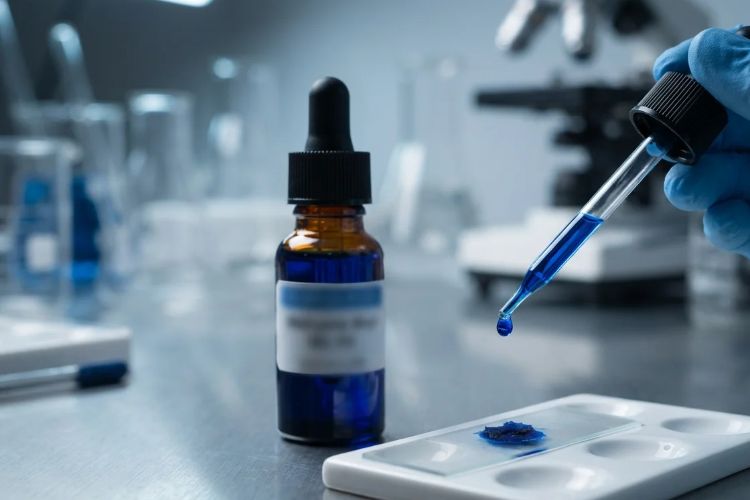
Methylene blue was first made in 1876 as a textile dye. It later became one of the first synthetic compounds used in medicine. Today, the prescription form, ProvayBlue, is an IV medication FDA-approved for acquired methemoglobinemia, a condition in which blood cannot carry oxygen properly. Hospitals also use it as a surgical dye.
The wellness version is different. Drops and capsules sold online are often labeled as supplements, and their purity varies widely. Some products are made from industrial or aquarium-grade material that was never meant for people.
Did You Know? In October 2026, methylene blue was listed on the U.S. Department of Defense Prohibited Dietary Supplement Ingredients List. Australia’s medicines regulator has also issued a warning about unregistered oral methylene blue products sold online for cognitive enhancement.
How Methylene Blue Works in the Body
Your mitochondria make energy by passing electrons along a chain of proteins called the electron transport chain. When that chain slows down, energy output drops.
Methylene blue can accept and donate electrons, which allows it to move them along this chain. Preclinical research suggests this may help mitochondria keep producing energy under stress. That is the basis for the “mitochondrial support” claims you see online.
Why Dose Matters So Much
Methylene blue shows a dose-dependent, two-sided effect. In animal research, low doses in the range of about 0.5 to 4 mg per kilogram of body weight appeared to support mitochondrial function, while doses above 10 mg/kg produced the opposite, negative effects. More is not better with this compound.
Methylene Blue Benefits: What the Research Shows
Here is an honest look at the evidence behind the most common claims.
Focus and Short-Term Memory
The most cited human study is a 2016 randomized, placebo-controlled trial published in Radiology. It included 26 healthy adults aged 22 to 62. One hour after a single oral dose of about 280 mg, the methylene blue group showed increased brain activity on fMRI during attention and memory tasks, plus a 7% increase in correct answers on a memory test.
That result is promising, but keep it in perspective: it was one dose, in a small group, measured for one hour.
Energy and Fatigue
Claims about all-day energy come mostly from preclinical research and personal reports. No large human trials have shown that methylene blue improves everyday energy or fatigue.
Brain Aging
Large trials of a related compound in people with Alzheimer’s disease did not meet their main goals. Research on methylene blue and brain aging continues, but there is not enough evidence to support claims in this area.
If your main goals are energy and recovery, our human performance programs start with labs, sleep, nutrition, and training before adding any therapy.
Methylene Blue Dosage: What to Know
There is no established methylene blue dosage for energy, focus, or mitochondrial support. Any use for these purposes is off-label and should happen only under physician supervision.
For context:
Approved medical use: The IV dose for methemoglobinemia is typically 1 mg per kilogram, given in a hospital.
Research dose: The 2016 memory study used a single oral dose of about 280 mg, roughly 4 mg/kg for an average adult.
Online products: Supplement capsules often contain 10 to 20 mg, and concentrations in liquid drops vary from brand to brand.
Never self-dose from online protocols. Body weight, other medications, and genetic factors all change how your body handles methylene blue.
Methylene Blue Side Effects and Risks
Common Side Effects
Blue or green urine, and sometimes a blue-tinted tongue
Headache
Nausea or stomach upset
Dizziness
Serious Risks
Serotonin syndrome: Methylene blue blocks an enzyme called MAO-A, which breaks down serotonin. The FDA warned in 2011 that combining it with SSRI or SNRI antidepressants can trigger serotonin syndrome, a potentially life-threatening reaction. Opioids and dextromethorphan (found in some cough medicines) raise the risk too. The prescription label advises avoiding serotonergic drugs within 72 hours of the last dose.
G6PD deficiency: People with this inherited enzyme condition can experience red blood cell breakdown (hemolysis).
Pregnancy: Methylene blue should not be used during pregnancy because of the risk of harm to the baby.
High doses: Large amounts can cause the very blood problem it is approved to address.
If you take an antidepressant, do not stop it or add methylene blue without talking to your physician. Our mental health support team can review your medications and goals together.
Did You Know? Serotonin syndrome symptoms can appear within hours. Watch for agitation, confusion, fast heartbeat, high fever, muscle twitching, and heavy sweating, and seek emergency care right away if they occur.
Smarter Ways to Support Energy and Focus
Low energy and brain fog usually have a cause worth finding. A physician-guided plan often looks at sleep quality, hormone levels, iron and thyroid markers, stress, and nutrition first.
Poor sleep is one of the most common drivers of daytime fog. Our guide to peptides for sleep covers what the research shows.
For cellular energy and healthy aging, our anti aging clinic services take an evidence-based, whole-body approach.
Options such as NAD+ therapy are also discussed with patients, always under physician supervision.
Conclusion
Methylene blue is a real medicine with an interesting mechanism, but the online hype has gotten far ahead of the science. One small study suggests a single low dose may support short-term memory, while claims about lasting energy and mitochondrial benefits rest mostly on animal research. The risks, especially serotonin syndrome with common antidepressants, are well documented. If you are curious about it, the right next step is a conversation with a physician, not an online order.
Talk to a Physician First

Texas Center Wellness is a physician-led wellness clinic offering telehealth care in 18 states, led by Dr. R. David Calvo. We review your symptoms, labs, and medications before recommending any therapy. Book an appointment or call (512) 957-0001.
Frequently Asked Questions
Is methylene blue safe?
It depends on the person, the dose, and the product. Prescription methylene blue has a long medical history, but it carries a serious warning for serotonin syndrome, is not appropriate for people with G6PD deficiency or during pregnancy, and online products vary in purity.
What are the main methylene blue benefits?
Research suggests low doses may support short-term memory and mitochondrial energy production, but most evidence comes from animal studies and one small human trial.
Can I take methylene blue with antidepressants?
Not without physician guidance. Combining it with SSRIs, SNRIs, or MAOIs can cause serotonin syndrome.
Why does methylene blue turn urine blue?
The body clears the dye through the kidneys, so blue or green urine is expected and usually harmless.
Medical Disclaimer
This article is for educational and informational purposes only and is not intended as medical advice. The information presented does not constitute a claim to treat, prevent, mitigate, or cure any disease or condition. Methylene blue (ProvayBlue) is FDA-approved for acquired methemoglobinemia only; its use for energy, focus, or mitochondrial support is off-label. All treatment decisions should be made in consultation with a qualified healthcare provider based on your individual health profile. Results vary by patient. Texas Center Wellness does not guarantee specific outcomes from any therapy.